
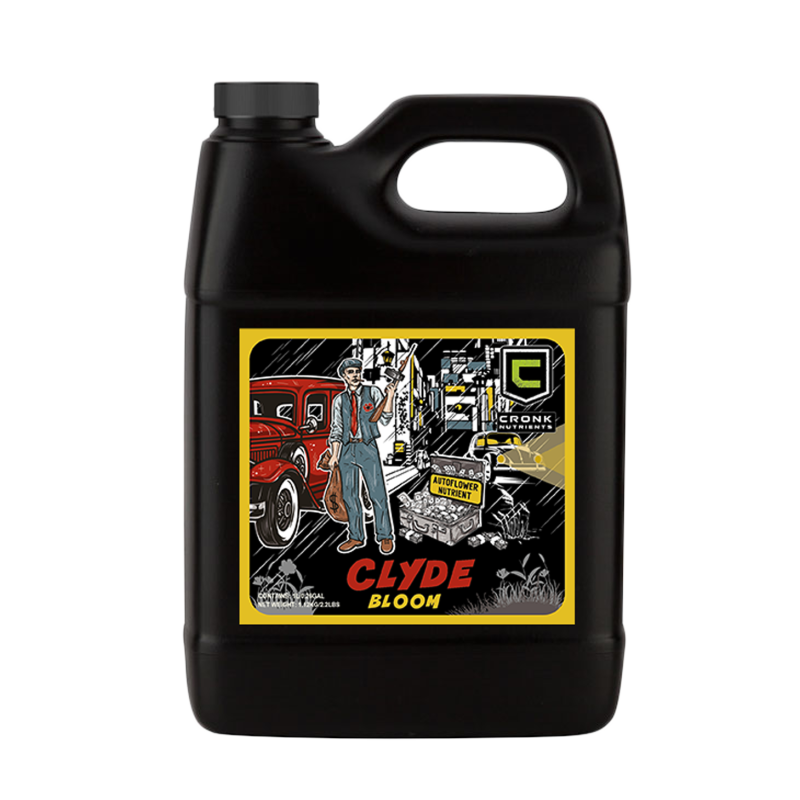
Cronk Clyde 3-6-5 Autoflower Bloom Fertilizer
- Product Code:Cronk Clyde 3-6-5 Autoflower Bloom Fertilizer 500ml
- Availability:2
-
$19.01
Clyde 3-6-5 is a complete flowering nutrient formulated specifically for autoflowering plants during their rapid 5-7 week bloom phase. Where photoperiod plants flower over 8-10 weeks with time for gradual nutritional adjustments, autoflowers demand optimized bloom nutrition immediately—Clyde delivers precisely what fast-flowering genetics need from the moment pre-flowers appear.
Autoflower Flowering Challenges
Autoflowering plants complete their entire flowering cycle in 5-7 weeks—roughly half the time of typical photoperiod varieties. This compression creates unique nutritional demands:
Why Standard Bloom Nutrients Fall Short
- No transition period: Photoperiod growers gradually shift ratios over weeks. Autoflowers need optimized bloom nutrition immediately when pre-flowers appear.
- Compressed peak demand: The intense phosphorus and potassium requirements of mid-flower occur faster and at higher relative intensity.
- No correction window: Deficiencies during autoflower bloom permanently limit yield with no time for recovery.
- Accelerated metabolism: Autoflowers maintain high metabolic rates throughout flower, demanding consistent nutrient availability.
Clyde addresses these challenges with a formula specifically calibrated for rapid autoflower reproduction—not adapted from photoperiod products, but designed from the ground up for compressed bloom cycles.
The Science: Why 3-6-5 Optimizes Rapid Bloom
Reduced Nitrogen (3%): Preventing Vegetative Interference
Excess nitrogen during flowering is counterproductive:
- Promotes continued leaf growth that competes with flower development
- Delays maturation and extends flowering unnecessarily
- Reduces resin and terpene concentration in finished flowers
- Causes "foxtailing" and abnormal flower structure
The 3% nitrogen in Clyde provides just enough for maintaining photosynthetic tissue and basic metabolism without fueling unwanted vegetative growth. This controlled nitrogen level allows plants to focus resources on reproduction.
Elevated Phosphorus (6%): Powering Flower Development
Phosphorus demand peaks during flowering for multiple reasons:
- ATP energy production: Every metabolic process powering flower development requires phosphorus-containing ATP
- Nucleic acid synthesis: DNA and RNA production for rapid cell division in developing flowers
- Phospholipids: Cell membrane components essential for expanding flower tissue
- Sugar-phosphate metabolism: Energy transfer and carbohydrate processing
The 6% phosphorus in Clyde—elevated compared to standard bloom formulas—meets the intense energy demands of compressed autoflower flowering.
Increased Potassium (5%): Quality and Structure
Potassium plays critical roles during flowering:
- Enzyme activation: Over 60 enzyme systems, including those producing terpenes and secondary metabolites
- Sugar transport: Moving photosynthetic products from leaves to developing flowers
- Water regulation: Maintaining turgor pressure and stem rigidity under flower weight
- Stress tolerance: Buffering against environmental fluctuations during vulnerable flowering
The 5% potassium in Clyde supports both flower quality (terpenes, resins) and physical structure (stems strong enough to support dense buds).
Complete Chelated Micronutrients
Clyde includes chelated iron, manganese, zinc, copper, boron, and molybdenum. During flowering:
- Boron: Critical for reproductive development and pollen viability
- Molybdenum: Essential for nitrogen metabolism even at reduced N levels
- Iron/Manganese: Maintain photosynthetic capacity powering flower development
- Zinc: Hormone production affecting flower formation
- Copper: Lignin synthesis for stem strength